

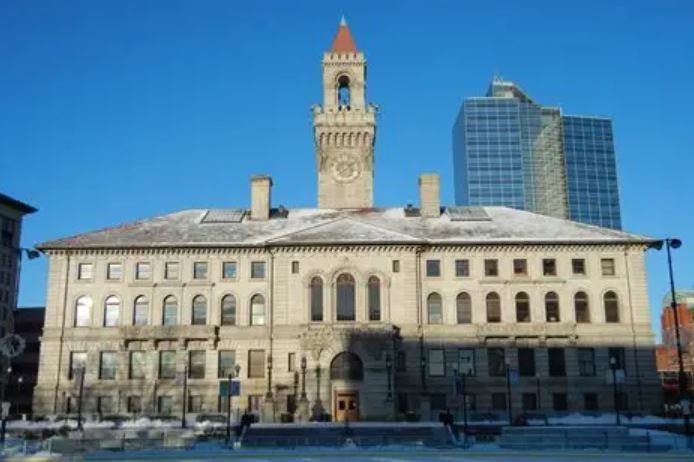
When Memorial Day approaches, it is important to take time and think about how our communities are able to preserve the memories of those who paid the ultimate price to defend our country. In the city, this appreciation is inscribed directly into the landscape. It is evident in the designated veterans squares that are a part of nearly every neighborhood, as well as the imposing Civil War monument standing on the Common. But perhaps the most striking and stunning military memorial throughout the area is the Worcester Memorial Auditorium at Lincoln Square. The historic structure was for around a quarter-century shut for public access and in a state of disuse, it is currently the center of a massive, government-funded $100 million restoration effort which aims to re-open the historic building as a new center for entertainment and culture while preserving its historic heritage as a veterans’ memorial.
Historical Records of England
The historical records show that the nation’s defense was a collaborative effort drawing upon local residents of all backgrounds. While many of these brave people wore uniforms of the military to fight in the front however, many stayed within the Worcester’s production facilities, which provided a vital industrial backbone to our wartime economics. Of the unfortunate ones who lost their lives while in the line of duty, a number displayed extraordinary bravery under fire – gallantry that earned them high-profile medals and awards as well as recognition from the United States and the French government.
Certain acts of heroism on the battlefield reveal the human cost that the war has incurred. For example, Private John Turano made the ultimate sacrifice by battling intense enemies’ fire to protect his wounded captain. It was an act of unimaginable bravery that earned him the Distinguished Service Cross and the French Croix de Guerre. The skies above Ypres, Belgium, Aviator 1st Lieutenant Warren Hobbs was shot down in June 1918. He was also honored by the Croix de Guerre.
Role of Captain Walton Danker
Even those ministering to the troops faced extreme peril; Captain Walton Danker, a chaplain, was fatally struck while tending to the sick and injured, receiving the Silver Star and the Croix de Guerre for his selfless devotion. Ultimately, these individuals represent a fraction of the immense local toll, as 355 courageous service members from Worcester gave their lives while in uniform during the war.
When the conclusion of the war was officially declared in November 1918, a wave of pure jubilation swept across Worcester. In a striking display of community pride and welcome, the city constructed a massive, temporary wooden replica of Paris’ famous “Arc de Triomphe” right on the Worcester Common, providing a grand gateway for the returning troops to march through as local crowds cheered their homecoming.
Just a few hours after that the armistice had been signed the civic leaders began to brainstorm ideas for the idea of a large civic auditorium. The idea was to build a permanent memorial which would forever honour those locals who endured the most gruelling sacrifice serving their nation.
Construction Completion Revenue
Construction was not completed until September 1931. However, after shovels struck the dirt, people swiftly got their work done.
While the Memorial War Commission raised nearly $160,000 from general revenues and veterans’ funds, the total cost of the monumental project ultimately reached roughly $2 million—the equivalent of over $48 million today. The commission heavily leveraged the massive surplus of available laborers during the Great Depression, managing to erect the building’s main structure in just seven and a half months. It was a remarkablely fast turnaround for a civic project of this magnitude.
The main auditorium has been decorated in Art Deco elements and features the official capacity of 3,099. To make the most of flexibility, chairs in the lower levels could be removed entirely, resulting in an 18,212 square-foot dance floor, or space for exhibitions.
At the front of the room, a massive 116-foot by 44-foot main stage was designed with a dual-aspect rear opening into the smaller Little Theater. This allowed both auditoriums to be used simultaneously, with the Little Theater adding 675 permanent seats to the complex’s capacity. Framing the main stage, the hall’s defining musical feature is a one-of-a-kind Kimball pipe organ boasting an immense total of 6,853 pipes.
355 Worcester Residents
The most awe-inspiring feature of the auditorium is the second-floor Memorial Chamber, where the names of the 355 Worcester residents who died in World War I are carved into the marble walls and lettered in brilliant gold. Above the list of names is inscribed the poignant legend: “They Ventured Far in the Cause of Liberty”. Large, floor-to-ceiling windows look out between the building’s massive exterior columns toward Lincoln Square, flooding the space with natural light. This light illuminates a breathtaking 2,500-square-foot triptych of murals painted directly onto the three remaining walls by renowned artist Leon Kroll—which, upon their completion in 1941, stood as the largest mural composition ever attempted in the United States.
Three of the walls are adorned with monumental murals created by the renowned American artist Leon Kroll. Intentionally composed to be far more than just “banal wall decorations,” the artwork was designed to vividly depict the diverse segments of the Worcester community affected by the conflict. Across 2,500 square feet of canvas, Kroll’s three panels feature over 150 figures—many modeled directly after real Worcester residents, including Gold Star mothers, local students, and local laborers. In May 1941, a mere few months prior to the U.S. entering World War II, the triptych was regarded as the biggest mural ever made by the United States up to that date.
Financial Crises
In the wake of financial pressures due during the Great Depression, the murals weren’t completed in May of 1941. This was nearly a decade later than the rest of the auditorium was opened.
In the intervening years, Kroll recognized just how drastically the world had changed. What began in the early 1930s as a retrospective tribute to a war meant to “end all wars” was finished under the dark, looming shadow of World War II.
Kroll
As he witnessed the growing global fascism, and knowing that a whole new generation of American young people could soon be sent to war, Kroll pivoted his approach. Instead of depicting a typical triumphal parade his 2,500 square-foot triptych with an incredibly strong sense of solemnity as well as community resilience. In the central section, instead of glorifying war, focused on the poignant reunion of families and soldiers and surrounded by the diverse group of Worcester’s workers in the industrial sector, farmers mourning moms. The murals finally revealed they had transformed from a symbol of the memories of the past to a contemporary heartfelt prayer for the coming peace.
What Leon Kroll Says
“In the three and a half years which have elapsed the world has suffered much. It has been no easy time for an artist to compose and execute a great memorial theme. First Munich, then the successive outrages of the Totalitarian powers seemed to conspire against the creation of a War Memorial. The three panels were scaled up and the charcoal sketches laid starting September 1, 1939, when Poland was invaded.” –Leon Kroll
Its World War I murals ultimately depicted a double trauma that remained a legacy of the Great War and the immediate stress of the 1930s’ economic crisis. To fully appreciate the significance of this memorial, we must examine it not just through the eyes of the disillusioned architects, but also the deep cultural ripples that it wrought over the next generation.
The Aud used to be in the midst of the community and hosted first dates, theatre productions as well as an array of live entertainment. Historical records from Preservation Worcester trace a legacy of musicians ranging from Chuck Berry to Primus, along with a long history of Holy Cross basketball games and graduation ceremonies. Although it was officially closed to public events on a regular basis in 1997, treating the building as an architectural ghost is not in line with its original goal. The current push to restore the Auditorium will seek to restore the vision of its designers, and fulfill Francis Henry Taylor’s mid-century pledge to ensure that a Memorial Chamber would permanently maintain its dignity, regardless of the challenges that lie ahead.
Long Term Vision
As the city develops its long-term plans for the auditorium building, prioritizing its integration into the public realm is vital. Recent municipal initiatives ranging from outdoor activities and food truck zones, to long-term digital innovation partnerships – are vital measures to bring new life to Lincoln Square. By blending modern utility with historic preservation, Worcester can introduce a new generation to the Aud while honoring the ultimate sacrifice of those the monument commemorates. Reopening these doors ensures that a space which uniquely shaped Worcester’s cultural legacy can finally do so again.
David DuBois writes about Worcester history for the Worcester Sun and his own website. He holds a master’s degree in history from Clark University. Follow David on X @davidjdubois