
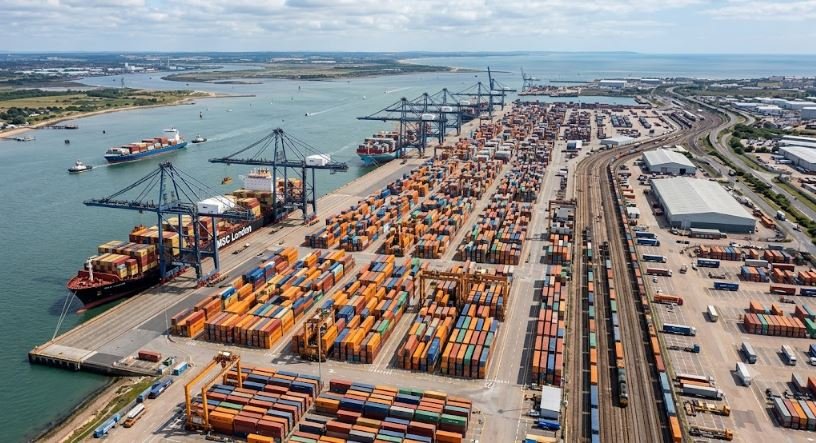
Ports are vital hubs of maritime trade.
Maritime transport is one of the primary drivers of global trade, carrying most goods between continents. At its heart lies port infrastructure that plays an essential role; beyond being mere transit points they serve as logistical, technological and economic hubs ensuring smooth trade flows, competitive business practices and operations are secured safely – essential components in maritime freight transport operations.
Logistics Hubs: The Modern Port
Modern ports are more than just a place for ships to tie up; they are also a hub where numerous modes of transportation come together – ocean/maritime, land and sometimes air. The infrastructure of the modern port facilitates the transfer of goods from one mode of transportation to another quickly and cost-effectively, allowing for global supply chains to function seamlessly.
The size of a ship’s capacity can vary significantly from ship to ship.
As international trade continues to grow at an unprecedented level, the sizes of ships are also increasing to accommodate the movement of thousands of standard shipping containers. Ports must continue to change by adding more depth to their quays, increasing the capacity of their container handling cranes and developing new and larger warehousing facilities; one way to measure a port’s attractiveness and position in the global marketplace is through its capacity.
Infrastructure needs to be handled and stored carefully
Currently, advanced machinery is used to operate a modern port. The use of automated cranes, conveyor belts and computerized warehouses will allow cargo to be loaded and unloaded from vessels efficiently, and they also require a type of storage area to store not only covered or uncovered items but also specific types of goods such as containers, bulk cargo, hazardous, or perishables.
Port security and safety is of utmost importance.
Ports are strategic locations where high – value goods transit. Their infrastructure must therefore incorporate advanced security measures – access controls, video surveillance, customs inspections and secure zones are just a few – to protect against threats such as piracy, smuggling and terrorism – modern ports are investing heavily to safeguard cargo and personnel alike.
Digitalization and smart ports
Port infrastructure is moving towards digitalization. “Smart ports” use technologies like the Internet of Things, artificial intelligence and blockchain to optimize goods flow. Digital systems allow real time tracking of cargo while simultaneously reducing document errors and increasing transparency – these digital transformations make ports more efficient and competitive.
Environmental impact and green ports
Ports also face environmental challenges, requiring infrastructure to incorporate sustainable solutions to reduce greenhouse gas emissions, limit noise pollution and protect marine ecosystems. “Green ports” invest in shore power systems, recycling areas and environmentally-friendly technologies – ultimately this ecological transition will shape maritime transport for years to come.
Ports are major contributors to their host economies.
Ports provide more than a place for handling containers; they generate direct and indirect jobs (thousands of jobs) and draw investment into local communities. They also promote industrial development initiatives, which increases the global competitiveness of their respective countries. The port’s infrastructure directly affects the global reputation of its host country.
Ports must coordinate their operations on a worldwide basis in order to facilitate maritime trade.
Because trade is an international business, ports need to cooperate to standardize their operations globally. Ports will reduce delays in the movement of goods if they have the same standards for infrastructure, procedures, and documentation. International organizations have a vital role to play in these efforts, which will ensure ports operate at the same level of safety and efficiency.
Ports face numerous challenges.
Ports continue to improve, but must overcome numerous obstacles, including increased demand for global trade; responding to new technology; dealing with climate change; responding to new health challenges; and responding to geopolitical events. To respond to this growing demand for new technologies and have the ability to adapt quickly to changing conditions in the future, ports need a more resilient, flexible, and innovative infrastructure system.
Conclusion: Infrastructure at the Core of Globalization
Port infrastructure is much more than technical facilities: it serves as the backbone of maritime freight transport and must remain modernized, secure and digitalized in order to facilitate global trade. When competitiveness relies on speedy supply chains that run reliably, investing in modern, sustainable port infrastructure represents investing in its future success and future trade relationships.