

In the UK, Coffee has always been more than just a morning beverage. Independent specialty cafes to prominent high street brands – coffee culture is now an integral part of everyday life. In 2026, though, in the UK, there is one thing that is inevitable: the price of coffee, coffee and more coffee, is much higher than it ever was before.
Now, the average price of a regular latte in the UK is up to £4.40, and even specialty and premium lattes are more expensive than that. Many customers may recognise that the price is increasing, but why is it increasing is a much more complicated issue than inflation alone.
The world of coffee is in one of the most difficult times in decades. The “new normal” of coffee pricing is driving up prices due to climate disruption, supply shortages, rising freight costs, market volatility, and increased operating expenses, all experts say.
This article delves into the reasons behind the UK’s high coffee prices in 2026 and what to anticipate in the coming years.In this article, we discuss the potential for the future and why coffee prices in the UK are so high in 2026.
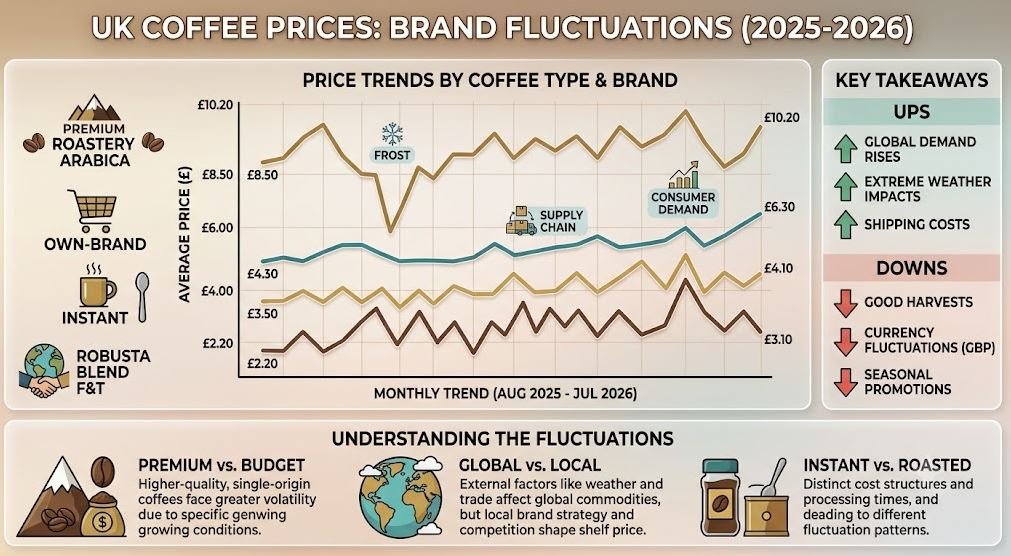
The Global Coffee Market Is Under Pressure
The “C-Market” (global commodity market) has a significant impact on the price of coffee. This market sets the standard trading prices for coffee globally, especially Arabica coffee which is popular in specialty coffee shops and cafés in the UK.
The past several years have been extremely volatile in the coffee market. The prices have skyrocketed because of limited supply and weather-related issues as well as uncertainty in the key coffee-producing areas. Some relief on the prices of coffee has been experienced during some periods in early 2026 but the prices of coffee are generally still at historical highs.
According to industry reports, the global coffee value chains continue to struggle to stabilise. The overarching price of importing, roasting, shipping and consuming coffee is still much higher than it was before 2023 when commodity prices were slightly down.
Climate Change is disrupted coffee production
Climate change is one of the biggest drivers’ behind rising coffee prices
The production of coffee is very sensitive to the environment. In particular – Arabica coffee needs stable temperatures, regular rainfall and certain growing conditions. Sadly, the coffee-producing areas’ are facing serious disruption due to climate change.
Brazil’s Weather Challenges
Brazil – the world’s biggest producer of coffee, has experienced droughts, irregular rainfall or extreme weather events several times in recent years. Additionally, significant coffee producing regions have been inundated and crops affected and quality of production lost.
Despite projections of a larger crop in some regions of Brazil for 2026, the long-term future is unclear as climate conditions continue to remain unpredictable.
Vietnam’s Supply Issues
In addition to the weather-related disturbances – Vietnam – the world’s top Robusta coffee producer, has also suffered from drought and varying harvest sizes. Robusta beans’ are also popular in espressos and instant coffees in Europe and the UK.
While Robusta prices eased slightly from earlier peaks in 2026, there is still a risk of price volatility due to climate events and geopolitical factors.
Risking temperature threaten Future Coffee supply
In recent years – studies of the climate in which coffee grows have been published, indicating that the southeast of Spain is no longer suitable for growing coffee. Global warming may severely diminish the land suitable for coffee cultivation in the next few decades, experts say.
This will increase the production costs of the coffee industry in the long run and re-pressurize the supply.
Freight, shipping and logistics expenses remain high
If coffee beans are successfully harvested – it has become a good deal more costly to have them reach the UK.
Fuel price hikes, geopolitical turmoil, container shortages’ and prolonged transit times are still disrupting global shipping networks. Green coffee import prices continue to be much higher than the historical averages.
Importers and roasters are now willing to pay extra for:
- Ocean freight
- Fuel surcharges
- Warehousing
- Customs handling
- Insurance
- Inland transportation
These costs are accumulated in the coffee supply chain before the coffee even gets to the café or consumers.
Logistics inflation is one of the most significant challenges for independent roasters and coffee establishments in 2026.
Rising Production Costs at Origin
Farmers of coffee are also paying much more for the production of their coffee.
The cost of fertilizers, pesticides, labor, machines’, irrigation and farm maintenance have increased significantly in the coffee-producing countries. Many growers are facing challenges in maintaining profitability – and even in adjusting to more challenging environmental conditions.
Some farmers are even developing climate-smart coffee cultivars investments are critical but also add to production costs that will ultimately trickle down the supply chain.
This has left the price structure of green coffee beans coming to the UK market higher than it was several years ago.
UK cafés face their own cost crisis
The (global) supply problem is not the end of the story. Coffee shops are also facing significant financial strain in the UK.
The ability of cafés and coffee chains to compete with the rising cost of their products in 2026 remains under threat as costs of the following factors continue to rise within the country:
- Higher energy bills
- Rising house costs and rents
- Rising staff wages
- Rise in the cost of milk and food products
- Business rate pressures
- Equipment maintenance costs
Profitability is very slim for many independent cafes. In order to stay in business, you may have to charge extra for your menu items.
Café owners often are taking a big hit on their own as they absorb part of the rising costs of running cafes, while consumers might see the price jump on their coffee.
Markets speculation and commodity volatility
Coffee is among the most traded commodities in the world. Financial speculation is, therefore, also a significant factor in price, besides physical supply and demand.
Investors and trading commodity traders are closely monitoring:
- Weather forecasts
- Crop reports
- Export data
- Currency fluctuations
- Geopolitical tensions
- Global shipping conditions
Coffee futures prices can change dramatically with any indication of a disruption in supply. This price instability brings uncertainty along the entire supply chain – making it challenging for importers and roasters to obtain consistent prices.
An occasional worry about the harvest quality of any coffee-producing nation, such as Brazil or Vietnam, can cause dramatic shifts in the coffee market overnight.
Why specialty coffee prices continue to rise
Rising costs are particularly impacting the specialty blend coffee market in the UK.
Ethical sourcing and sustainability, direct relationship and quality beans are on the mind of independent roasters. These practices help increase transparency and provide a more equitable benefit to the coffee producer, but they also raise sourcing costs.
Instead of just selling the coffee by price, many specialty coffee brands are marketing their product with a focus on quality, sustainability and traceability which can help to justify higher retail prices.
This makes the prices consumers are paying for premium coffee products even higher than ever — and with a particular focus on the ethical and sustainable production.
What do consumers expect in the future?
Several projections indicate that if global production turns around, then coffee prices might normalize, but most industry experts doubt there will be any reprieve from the days of cheap coffee in sight.
Due to varying crop performance and commodity market conditions – the price of coffee can be expected to continue to fluctuate throughout 2026; however, structural factors are unlikely to change:
- Climate instability
- High logistics costs
- Supply chain fragility
- Rising labour expenses
- Sustainability investments
In many senses, the coffee industry is undergoing a prolonged shift to higher production cost, at a global level.
As a result, the UK consumer will have to pay for coffee at a higher price at cafés for the time being.
Final Thoughts
The UK’s coffee prices have skyrocketed in 2026 – but there’s a lot more to it than just the prices in the cafes. Climate disruption, global supply shortages, freight inflation, commodity volatility and an increase in operating costs are all contributing to a complex set of problems in the industry.
The entire value chain of coffee is stressed from the farms in Brazil and Vietnam to the cafés on British high streets.
While these increasing costs pose difficulties for companies and consumers – they also underscore the significance of sustainable coffee farming, ethical practices, and long-term resilience in the global coffee market.
In an ever-changing market, quality-driven coffee companies with transparency and sustainability in mind will be expected to make a significant impact on the future of coffee in the UK.