
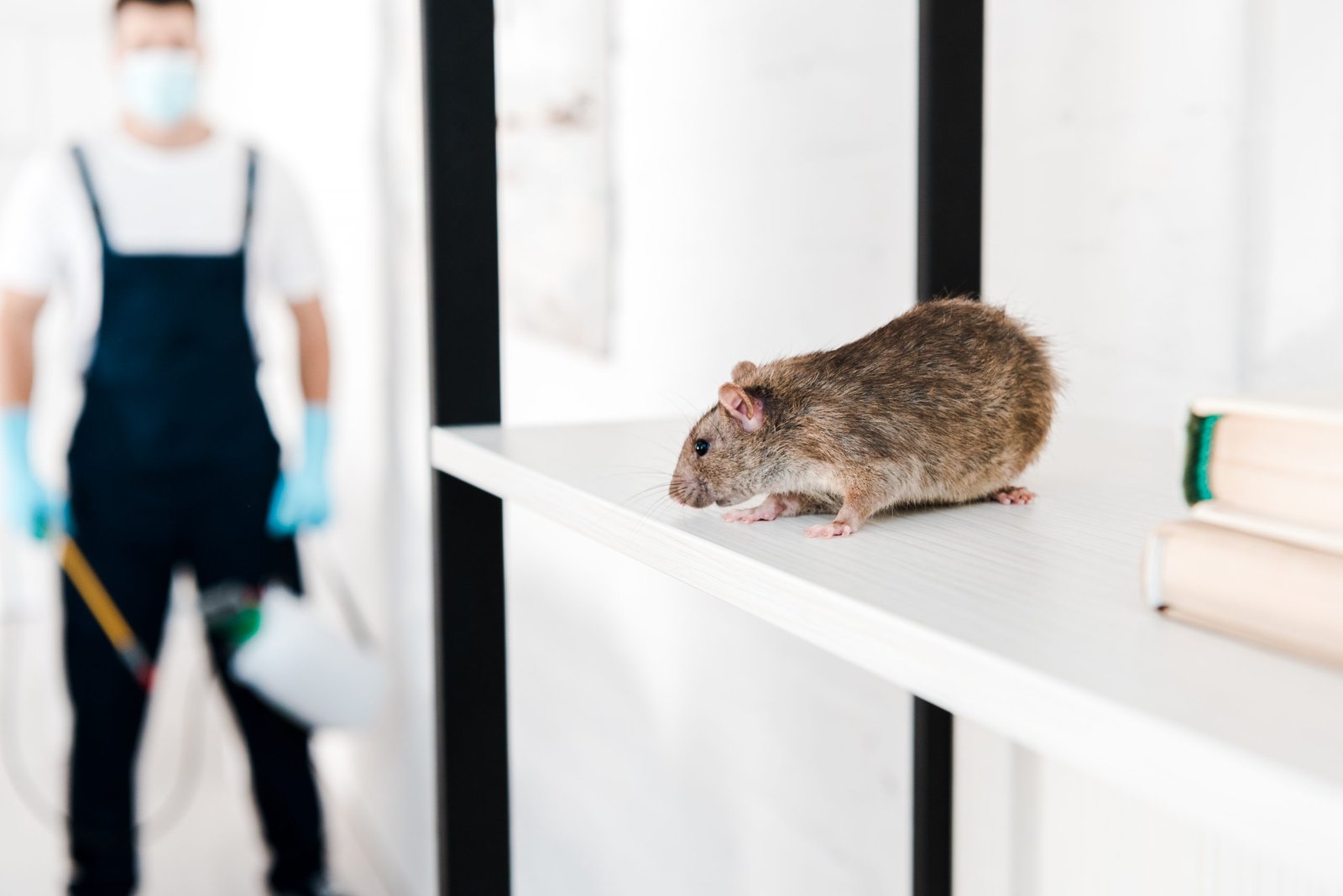
UK Innovations in Rodent Control Technology: Smart traps, ultrasonic repellents, and AI-based monitoring
Pest Control in a New Era
Rodent control has long relied upon conventional approaches involving mechanical traps, poison baits, or protective grilles as well as manual interventions – techniques which have proven themselves efficient under certain circumstances but may present significant limitations in others. Rodents (rodents and mice) are highly intelligent animals with excellent agility that have developed resistance against chemicals. Given this reality, pest control experts and researchers have come up with innovative new methods of pest prevention which are more precise, sustainable, and long-lasting – such as ultrasonic repellents, smart traps, and artificial intelligence monitoring systems that are revolutionizing pest prevention standards.
Smart traps: precision and connectivity
Smart traps represent a significant advancement over traditional devices. Packed with cameras, sensors, and communication devices, smart traps offer significant benefits over their predecessors – they equipped with cameras and sensors capable of detecting the presence of rodents in an area, identifying them, and transmitting information in real time – unlike mechanical traps, which require manual verification after every animal capture or activity detected.
Some models feature thermal or sound recognition systems, allowing species to distinguished and the response adjusted accordingly. For example, traps with such technologies could be design to only trigger their activation when their temperature signal matches that of an adult animal, with the goal of lowering capture errors or initial unnecessary captures and risk of animal suffering, and improving the effectiveness of the procedures. Smart traps could be particularly useful in complicated environments such as warehouses, hospitals, sewer systems, or multi-unit buildings. By providing constant monitoring, mapping risk areas, and targeted intervention – as well as reducing visits – smart traps enable pest management firms to maximize both financial and human capabilities more effectively than ever.
Ultrasonic repellers: A non-invasive solution
Ultrasonic repellents are another recent innovation that is quickly gaining in popularity. These devices emit soundwaves that cannot heard by humans but that are highly effective at repelling rodents – the aim being to create an adverse environment that forces pests away without using toxic chemicals or traps as solutions. Modern ultrasonic repellent models utilize modulated frequencies to avoid rodents becoming used to their sound, as well as motion sensors which activate it only when animals are present – thereby saving energy while increasing the durability of the device. Ultrasonic repellents are great solutions for sensitive areas like kitchens, children’s bedrooms, and healthcare facilities, as well as food storage spaces.
Effectiveness depends upon many variables: location and size of infestation; species and performance of the rodent; and device performance. They’re best used alongside other methods in an integrated pest management strategy for maximum effect – their main advantage being non-invasive silence and environmental friendliness.
Artificial intelligence surveillance: anticipating rather than reacting
Artificial Intelligence is revolutionizing detection and management techniques. Machine learning algorithms use data analysis techniques to quickly spot early indicators of presence. Microphones installed in high-risk zones can record noises made by rodents, such as scratching, squeaking, or movement, which AI then analyses to determine their type and location – even quantifying potential infestation numbers! AI monitoring technology can detect early warning signs before they become visible to the naked eye, as well as map infested areas dynamically to allow specialists to act more specifically and efficiently. By decreasing chemical usage and eliminating unnecessary interventions, this monitoring method leads to sustainable pest control measures.
Create a sustainable and integrated strategy.
These solutions don’t serve as standalone solutions but rather fit into an overall rodent management strategy. Modern methods involve employing several strategies – prevention, monitoring, specific intervention, and continuous evaluation. Smart traps enable precise capture of people; ultrasonic repellents create a threatening setting while artificial intelligence ensures constant monitoring. This holistic approach offers several advantages. It reduces environmental impact by restricting the use of toxic products; increases safety for occupants by limiting chemical or mechanical traps; lowers costs by focusing efforts where they’re required; and provides greater traceability of interventions with precise information about results achieved.
Pest control firms are investing heavily in these tools in order to train their staff on how best to use them, collaborate with researchers on new device research, and work towards producing more efficient devices. Property managers, local authorities, and individuals are rapidly adapting these solutions as their environment rapidly changes with regard to pests.
Obstacles that need to be addressed
While technology can provide benefits, challenges can also arise. Initial purchase prices of equipment may be initially prohibitive for small and even home businesses. Reliability will depend on maintenance practices being performed appropriately and how well they conform to the local environment; analysis and collection of or sourcing from data is probably a source of security and privacy problems in situations involving sensitive environments.
Establishing standards, training professionals, and educating users about ‘best practices’ is essential to maintain health and welfare in any community. Manufacturers must provide strong, durable, transparent, and reasonably priced products. Authorities can help add support for research initiatives, access technology, and regulate use as needed.
An improved, humane, and safer fight environment
Rodent control has entered a new stage, propelled by technological advancement. Ultrasonic repellents, smart traps, and monitoring with artificial intelligence provide more effective, efficient, sustainable, and cost-efficient solutions compared to traditional reactive approaches, helping us transition from being reactive to anticipatory in response to pest problems before harm comes our way.
At a time when economic, health, and environmental challenges are becoming ever more intertwined, these technologies represent an important milestone. Although they will never fully supplant human experience, they do augment it by providing effective tools that allow for quicker identification and elimination of infestations, as well as improved success rates. Managers, residents, as well as professionals can all use these technologies for an improved humane, compassionate, and efficient fight against rodents.