
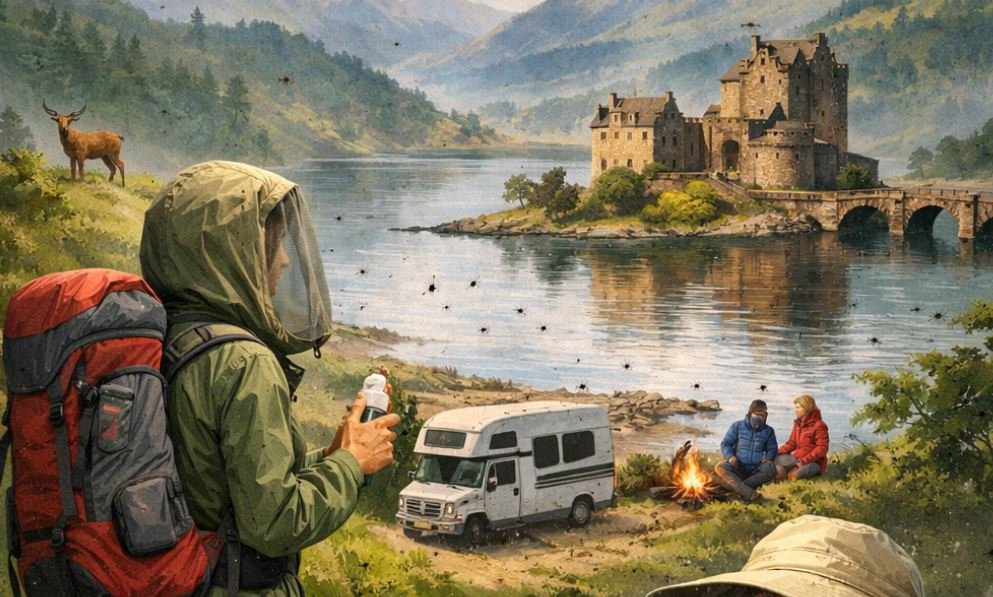
For an adventurous traveler, there are many hiking trail routes throughout Scotland linking all of the stunning landscapes, beautiful mountains, calm seas and historical castles. Yet there is one unexpected disappointment that visitors may have during their visit to Scotland; The midge (an insect). The midge is a natural part of the Scottish environment and usually exists in large quantities from late spring until the end of the summer months. For many, midges present a nuisance and understanding their life cycles will help you to go outdoors without experiencing as much discomfort from midges, thereby making the overall experience much more enjoyable.
What Are Scottish Midges?
Scotland is home to a large variety of flying insects known as midges. The size of these flies when compared to mosquitoes is very small. When a female midge feeds, she leaves a little itchy red mark on her host (human); however, there are no known diseases transmitted from midges to human beings. This makes them an annual nuisance found in many areas of the United Kingdom and especially within the country of Scotland. Female midge flies need protein from animal blood in order to make eggs, which is why they bite. Their attraction to males is derived from the release of carbon dioxide, moisture from cars and heated surfaces, and heated bodies. Once the female midge flies find a source of food (in this case, a human), they will usually congregate in large groups.
When Does Midge Season Begin?
The midge season usually starts in late May. It continues until early September. The busiest period is normally July and August. Warm temperatures and damp weather help midge numbers increase. Weather conditions can make the season begin slightly earlier or later each year. Visitors to Scotland in the spring months tend to have less of an experience with midges than do summer visitors. A visit in early autumn may also be a pleasant experience since midge activity begins to taper off during the fall months.
Places Where Midges Are Most Common
Midges can be located in many rural areas in Scotland. In Scotland, midges can be found everywhere on the island of Skye; around Fort William and the surrounding areas; along Loch Lomond and the Trossachs; and throughout the West Highlands with excellent densities of midges present. East coast Scotland is much drier and has much more wind than west coast Scotland which will generally result in a great reduction in midges. Areas on both coasts of Scotland which receive sea breezes will generally have even fewer midges than places that do not receive sea breezes.
Weather as a Big Role
Midge behaviour is primarily governed by the weather. The humid and warm temperatures of a summer day, calmness of the evening, or a light rain followed by calmness can generate a lot of midge activity. Windy conditions are beneficial because it hinders the midges from flying. They fly poorly in a windy environment; thus causing them to not fly. The sun will also have an effect on the midges. Bright sunlight will limit their activity, particularly between noon and 1 p.m. Because of this, walking for long periods of time should be done later in the morning rather than very early. Overall, it is more enjoyable to do anything outdoor during the afternoon when there is wind than it is in the morning.
Simple Ways to Reduce Midge
Plan accordingly with your personal wardrobe for safety against midges. Light-coloured and lightweight are best when it comes to clothing; dark colours attract midges. Other suggestions for preventing midges/biting insects from disturbing you while outdoor include applying an insect repellent prior to going outside or wearing a midge head net if you’re going to spend time outdoors (hiking, camping, fishing) in an area where they are prevalent.There is very little wind in midges’ preferred habitats, and therefore when at dusk try to avoid being near areas with either still or slow-moving water or in heavy wooded areas that are calm. Staying as active as possible will reduce your likelihood to be bitten by a midge; Since they prefer to bite stationary items.
Choosing the Best Time
If you want to go hiking or see sites, then May or the early part of June are great options – there will be more bright green countryside, longer days and less certainty of midges (tiny flying insects that can be bothersome) compared to other summer months (like July and August), when the weather will be generally warmer and there will generally be longer daylight hours; however, these months tend to have lower visitor numbers. However, they are also the busiest period for midges in many Highland areas. September is another good option. The landscapes begin to change colour, visitor numbers fall, and midge activity usually starts to decline. Outdoor conditions often become more comfortable for walking and photography.
Camping During Midge Season
Camping provides visitors with opportunities to enjoy and explore the scenery of Scotland. It’s also important to prepare ahead of time for your camping experience so that you have a great relationship with nature. As often as possible seek campsites that are open and exposed to wind as these areas typically should have fewer midges to bother you than campgrounds in a sheltered area like a wooded camping ground or camping right alongside a very still body of water. After you have set up your tent and gone inside to sleep, seal your tent closed to avoid insects from getting in. Do not leave any food materials out. When changing into your evening clothes due to being active outside, put on clean clothes. Midges become much more active during the evening when the air becomes calm.
Are Midges Active All Day?
No. Midges are not equally active throughout the day.
Midges tend to be most active early morning and at dusk, with the greatest numbers being present for calm evenings. On sunny days or windy afternoons, midges are very hard to find. Many individuals prefer to start their long hikes after the morning’s midge activity is over. It is a good idea to check the weather conditions in your area before you set off on your hike, as the number of midges in an area can be affected by the temperature and wind speed.
Common Myths About Scottish Midges
Many visitors hear exaggerated stories before travelling to Scotland. Here are a few facts.
- Myth: Midges are everywhere in Scotland.
Fact: Many towns, cities, coastal areas and windy locations experience very few midges.
- Myth: Midges can ruin every holiday.
Fact: Most visitors enjoy their trip without major problems by using insect repellent and planning activities carefully.
Mostly Asked Questions
- Visiting Scotland during midge season is fine?
Yes. Thousands of people visit Scotland every summer. A little planning is usually enough to reduce any inconvenience.
- Which month has the fewest midges?
Late spring, particularly May and early June, often has lower midge activity than the middle of summer. Conditions can vary depending on the weather.
- Do cities have many midges?
Large cities such as Edinburgh and Glasgow generally experience far fewer midges than rural Highland locations.
- Does rain increase midge numbers?
Wet conditions help create suitable breeding environments. However, heavy rain can temporarily reduce flying activity until the weather becomes calm again.
Conclusion
There are many forms of natural beauty within Scotland’s rural areas including many different kinds of midges. While these little pests can be annoying they should not stop anyone from taking advantage of all that Scotland has to offer. In order to be able to visit well during the summer months you need to plan ahead carefully! Selecting appropriate clothing, using a quality insect repellent, and planning outdoor activities with the weather in mind (i.e. don’t arrange outdoor trips when there’s no wind and vice versa) will greatly affect your overall experience. With the proper preparations, you will be able to explore the amazing sights (i.e. the Highlands, lochs, forests or coastlines) throughout Scotland with appreciation and enjoy your exploration whether your interests are scenic driving or having a quiet rural retreat.